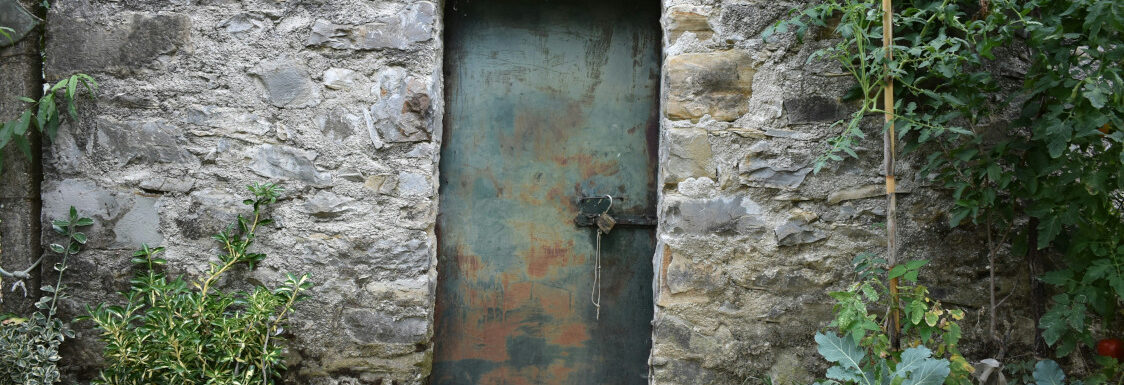
A heartfelt welcome to this first essay on The Hidden Things in 2026. I hope your year has started out well!
After spending the better part of the past year in the congenial (and sometimes challenging) company of the Hermetic planets, this post today marks the start of a new essay series. In this series, we’ll move away from Hermeticism, and from the heavens… very far away.
In fact, we’ll spend the next few months right down here on earth, with a solid connection to the ground, and to the things it bears. But while the topic of this series is about as different from the topic of the last series as one can imagine, in some other regard they are very closely related.
During our work with the Hermetic planets, we had focused on what I like to call “Inner Work”: on improving yourself and your life.
Although, to me, “improving” is a somewhat misleading term. In the end, you are who you are, and “improving” your true self is neither possible nor desirable – but obviously, it’s up to you whether you aim to make the best of your self and your life, or whether you continue with whatever unproductive habits, destructive behaviours and all other sorts of less-than-helpful things you might cultivate in your life. 😉
Just like last year’s essay series, this one is also going to contain a heavy dose of prompts and suggestions for your Inner Work. What you do with them, and to what extent you put them to good use, is completely up to you, of course.
And if you feel that none of these should even apply to you and your life (which I highly doubt, but hey… your life, your choice!), well, then you can still read this series for its entertainment value – and for its deliciously practical exercises. But more on those in a second… 😉
In my teaser for this essay series, I promised you, well, not quite fireworks, but something very close: something sparkling and bubbling, full of life, and equally full of fun and pleasure – and potentially explosive.
(I also promised you an interesting, thought-provoking and somewhat unconventional topic, and I hope that by the end of this series, you will feel I have overdelivered!)
So what, then, is this essay series going to be about?
A very good and valid question! In order to answer it, I want to take you on a tour of some strange and unexplored place, a place where mysterious things happen, and where hardly a human has ever set foot… I’d like to take you on a tour of my basement.
Hold on tight, please, and don’t get lost on the trip!
For there are spiders down there, and other peculiar critters (about which we’ll talk a lot later in the series). There are also some dusty corners (ok, ok, I admit it: quite a few dusty corners…), cobwebs, and I’m afraid the lighting isn’t all that good once we get a bit further away from the bottom of the staircase.
Now, while this sounds like the start of a scary horror movie, I can assure you it isn’t.
(Granted, spiders are indeed not just tolerated, but welcome in our basement. They are mostly very well behaved, though. And we rarely ever feed them any visitors, so you should be perfectly safe during our little trip below ground. 😉 )
All kidding aside, though, we’re very grateful that our basement features what most basements lack nowadays: a good, old-fashioned storage cellar. You might know the kind, maybe from old horror movies (sorry!) or from visits to really old houses: solid, unplastered brick walls, cool, and always slightly damp and musty smelling.
This is the kind of cellar in which, for centuries, people in many parts of the world used to store a sizeable chunk of their food:
Apples and potatoes in wooden crates, cabbage heads, turnips and carrots in boxes of moist sand, some home-brewn wine or beer of whatever variety, maybe a home-cured ham or some sausages hanging from the ceiling, jars upon jars of homemade preserves and jams on the shelves, and loads of other delicious (and life-saving) goodies.
But in most such cellars, people also used to store something else…
As we move through our basement and into the storage cellar with its bare brick walls, you can feel the cool, damp air. It does smell slightly musty, but it also carries some other smells. Some of them enticing, reminding you of summer and harvesting time and of fresh produce – and others are unusual and strange.
(And yep, that thing above us on the ceiling is a fat spider. There’s no need to panic, though – I told you they’re mostly well behaved, didn’t I? 😉 )
There is no outside light down here (most of the foodstuffs will store a lot better in the dark, after all), and, admittedly, we really should put up some more light fixtures – that single lightbulb doesn’t do much if you don’t know what to look for down here.
But still, once your eyes have gotten used to the dim light, you look around. And over there, in the far corner of the cellar, you spot a large, brown earthenware pot. More than knee-high, it sits there inconspiciously… until, a few seconds later, you can hear a quiet but distinct sound from that corner, like a bubble popping on a surface of water.
This pot, dear reader, is not just a family heirloom which I inherited from my mom, who inherited it from her mom… it’s also the entrance and the key to our essay series.
Let’s lift the lid and take a peek inside, then, shall we? 🙂
And what you see (and smell!) inside, covered with a cloth and submerged with a couple of weights, is – a pot full of home-made sauerkraut.
(We’re in a German basement, after all. What did you expect? 😀 )
Now, if you’ve never before stood before a pot of home-fermented kraut, you’re in for an interesting experience of the olfactory kind. 😉 Fresh, good kraut has its very own distinct smell: a bit sour, a bit cabbagey, and, well, like kraut.
(You know how there are smells which you will always remember, but can’t put into words? This is one of them.)
Let’s fill a bowl with the fresh kraut from the pot before we close the lid again, then, and trek back up to the surface of the earth. Once we’re all safely on the ground floor, and a quick headcount has shown no losses to spiders or other special features of our basement, let’s take a seat at the kitchen table, deal out some forks – and dive into the bowl together.
Have you, dear reader, ever had the unique and great pleasure to eat fresh, homemade sauerkraut?
Maybe raw, like we’re doing right now. Or maybe cooked, with some sliced apple, some onion, juniper and caraway (and of course cooked with a healthy dash of white wine!)?
If not, you’re in for a treat. ‘Cause by the time we’re done with this essay series, if you truly follow along with it and do your assigned homework, you’ll be able to enjoy your own homemade kraut – and all sorts of other delicious goodies, of the kinds which your grandparents and their grandparents might have produced and stored in their own storage cellars.
Just like my parents and my grandparents made a huge batch of sauerkraut every year in the pot which is now bubbling merrily in the corner of our cellar – and like I hope that my own (future 😉 ) grandkids will still make their own yearly batches of kraut in the same pot some decades down the road…
At this point, I can almost hear some of you objecting:
You’re not German. None of your ancestors was even remotely German. You got your gene heritage done, and it shows equal parts American Indian, Siamese, Finnish, and Japanese, with some Inuit thrown into the mix for good measure – but definitely no German Kraut genes, and also no other ancestors which might ever have been tempted to produce something as smelly as sauerkraut.
Besides, you don’t even own a basement, let alone a storage cellar!
Well, it’s a good thing this isn’t an essay series about sauerkraut, then, isn’t it? 😉
Instead, as I’m sure some of you might have guessed by now, this series is about fermentation – fermentation in all its bubbling, sparkling, delicious and enjoyable glory. (And the drinks, let’s not forget about the wonderful fermented drinks!)
No matter where your ancestors came from, no matter where they lived, no matter what they ate or drank – it’s almost certain that home-fermentation was a part of their routine, and that fermented food and beverages were a part of their diet (and their pleasure).
I doubt there was ever a human culture without fermentation. Wherever humans are, there is fermentation.
But fermentation is more than just food and drinks: It’s a living thing, a connection to tradition, to the earth and its fruits, to health and nourishment, enjoyment and pleasure – and to the realm of the spiritual.
By now, you might be scratching your head, though. After all, at the beginning of today’s essay, I promised you another essay series focused on Inner Work. More essays which would help you to improve and change yourself and your life in productive ways.
But here we are, raving about food. Have I suddenly and unexpectedly turned into a food blogger?
Well, nope – I haven’t.
(Although the temptation is certainly there. Imagine it: I could spend all day writing about my personal sensitivities, and then smack some Brussels sprouts recipe at the bottom and be done with it. Although I’d probably not enjoy having to take umpteen photos of recipe stages. Plus, I love Brussels sprouts way too much and would never treat them this unkindly! Thus I’m afraid you’re stuck with me writing about other topics. Stuff like the Hermetic planets. Or Inner Work. Or, well, fermentation.)
So how, then, does fermentation relate to Inner Work? Is there, maybe, some kind of “Inner Fermentation”?
Well, maybe – but we’ll get there in due time. 😉
For that matter, during the course of this essay series, we’ll also get to tradition and culture, to food and beverages, to the earthly and the spiritual realm. And just for good measure, there will be recipes, too…
In fact, if you’re seriously going to follow along with the essays, by the end of the series you will have done a good deal of Inner Work:
Among other things, you’ll have had a good, hard look at certain processes inside yourself. You will also have contemplated family ties, and your relationship to the culture and society around you, and to some of its traditions. And you will have gained quite a few insights about yourself and your life (and maybe also have made some changes to it, but this is really up to you).
But on the other hand, if you really, truly follow along, you will also have done a lot of fermenting.
You see, while I don’t intend to become a food blogger, the joke above had a kernel of truth: This is a hands-on essay series. There will be “homework” for you to do – both of the Inner Work sort, and of the fermenting sort.
‘Cause, really, what would be the point of reading an essay series about fermentation, if you wouldn’t get to enjoy all of its wonderful results, too?
(I do hope that the prospect of delicious food and drinks is tempting enough to convince you that actually doing the homeworks and really engaging with this essay series will be worth your while!)
So why did I pick the topic of fermentation in the first place, and for a whole essay series to boot?
Well, first of all, fermentation is a topic which is near and dear to my heart. I love to ferment things. Which, btw, is not the same as loving to eat fermented things (which I do, too, at least for most of my results… 😉 ).
But there are other, deeper layers to the topic of fermentation.
As you can guess from the trip into my basement on which I took you a bit further above, to me fermentation is about more than just what I do. It’s part of a history, of family traditions, of traded down pots and recipes, of culture and of having a relation – to the people before you, and to the earth and its fruits.
Since these connections can be quite rare nowadays, having a closer look at them, and maybe re-establishing some of the relations and traditions, will be a valuable thing. As humans, we don’t function well if we’re completely adrift, at least not for long – relations and connections can give meaning and support where it would otherwise be direly lacking.
And what would be better suited in helping us explore these things than fermentation, which has played such an important role for humans, throughout all times and in all places?
There is yet another reason, though.
After last year’s essay series on Inner Work with the Hermetic Planets, you might have expected me to pick another “occult” topic for the new series. Based on this expectation, fermentation might seem like a boring thing. Yes, hands-on, and yes, the results can be eaten, but come on… there’s nothing occult about it, right?
Well, not quite. Remember that the word “occult” actually means “hidden” – and as we will see, there are quite a few Hidden Things within the process of fermentation, on different levels.
A fitting theme for this blog, then, isn’t it?
Finally, there is also the connection between fermentation and Inner Work which I feel is well worth exploring, and which I’ve never seen explored in this way elsewhere. Where it’s going to lead you?
Well, as usual in they way I teach Inner Work, that’s up to you. What I can promise you, though, is that there will be places worth exploring – and things worth fermenting…
Before we close for today, I want to explain a few things about the structure of these essays.
Further above, I promised you hands-on exercises and homework. (Maybe I should have called them “hands-on experiences” instead… 😉 ). At the end of each essay, there is going to be a section with such a Hands-On-Fermenting Homework. It contains something for you to do, and mostly something to ferment.
Throughout the texts (or maybe also in dedicated homework sections at the end, I haven’t made up my mind about this yet), there will also be pointers and suggestions for your Inner Work: Things you can do, think about, contemplate, reflect on, try, change, … in yourself and your life.
What you do with these suggestions is up to you (although to get the most out of the series, I strongly suggest you actually do your homework!).
What you do with the practical homework is also up to you, of course. But again, you will profit immensely and get a lot more out of the series if you actually do some fermenting of your own and have some practical insights, experiences and knowledge to draw upon.
(I will also refer to the practical parts again and again throughout these essays, and you might feel left out if you don’t follow along. Just sayin’… 😉 )
For today, there are two pieces of homework for you:
Inner Fermentation Homework
The first is pretty simple: Think about the role fermentation might have played, or has played, (or still plays!) in your family and for your ancestors.
Do you know of any kinds of fermentated goodies which used to be a family staple? Any family traditions, or family recipes for fermentation?
Is/Was there any older family member who was renowned for their fermented whatnot?
If you still have older family members whom you can ask, consider talking to them about fermenation. Maybe they remember some stories or recipes from their youth?
The second is not much harder: 😉
Hands-On Fermentation Homework
In order to follow along with the fermentation homework fun over the course of this series, you will need a few things. Most of them aren’t hard to get by, nor are they expensive.
The foods we ferment should be readily available in a lot of places (and if not, there are usually replacements which will work just as well).
And the equipment you need is stuff which you will most likely find among your existing kitchen tools. And even if not, again, there are usually replacements or other options which will also work – a little creativity will get you a long way when it comes to fermentation!
The one thing you will need and might not have at hand are some jars with lids: ideally glass jars, and not too small.
Having some which can hold at least a litre of water, i.e. roughly four cups, (or more!) would be ideal – although worst case, you can always make smaller batches of whatever goodie we will be fermenting, or use some more jars in the process.
Mason jars are great for fermenting, and if you can easily (and for a reasonable price) get some, then go for it. If not, glass jars with screw-on lids are perfectly fine, too.
You don’t need to buy new jars. Instead, feel free to re-use jars from store-bought food (and yes, you can of course ask other people to keep suitable jars for you, or to go through their own basements or attics to see what they can dig up – and then share your delicious results with them later… 😉 ).
Bonus points if they have rather wide mouths, as this will make the handling of your ferment easier for you!
Pro tip: Sometimes stuff like pickles etc comes in really big sized jars – if this is something you will use up, then invest in some, eat the contents, and you will have a nice jar for fermenting… 😉
Glass is the best material for fermentation as it will not react with the fermented foods, and no extra material (like traces of plastic or metal) will end up in your food.
(There are exceptions, of course, like earthenware kraut pots. But their materials are specifically chosen to be not just food-proof, but to also be food-proof when confronted with acids. They are also usually not cheap. If you can get one for little money, get it and treasure it. If not, for starting out, big glass jars will be all you need…)
In any case, you can (and should) start collecting some jars now, as they will come in handy in the upcoming weeks and months.
Also, if possible, add some glass bottles to your collection.
A few bottles with snap-on lids would be perfect, but if you can’t easily get them for a reasonable price, screw-on lids will do just as well.
Some kinds of beer come with snap-on lids, at least in Germany, thus if you know somebody who drinks beer, that’s the easiest way to get them. Bottles with screw-on lids and wide necks are (again in Germany) e.g. available with tomato puree (passata) in them.
The jars and bottles need to be clean before you start fermenting in them, but you don’t need to sterilize them, or anything like this. And please, pretty please, do not use any kind of bleach, disinfection, or anti-whatever chemicals on them! Just plain washing them (in the dishwasher or by hand) with an additional rinse at the end will be perfectly fine.
All the rest, as I said, is mostly the usual household stuff: Some bowls or pots, a kitchen knife, spoons, etc – and again, worst case you can always get creative!
So this is your Hands-On Fermentation Homework for today: Start collecting jars and bottles!
Some notes about the foods you’ll need to buy – or grow
I didn’t tease you with a batch of sauerkraut for nothing, of course. 😉 At some point later in the year, you will tackle your own homemade batch of kraut (and, as an aside, learn a lot of things from it about yourself and about life in general!).
You can easily solve this by buying a head of cabbage, of course – but if yo ushould be an avid vegetable gardener and want to grow your own kraut, you will need to plan ahead:
Either white or red cabbage will work fine. Traditionally, pointed cabbage (sweetheart cabbage) is used for sauerkraut, but if seeds aren’t easily available to you, other heads of cabbage will be just as good.
(And if leafy cabbage doesn’t grow at all where you live, almost any other kind of edible leafy vegetable will work just as well. For starters, pick one which easily gives you a large amount of material, whose leaves aren’t too soft, but rather sturdy, and which isn’t too bitter.)
If you want to follow along right when we get there in the essay series, be advised that according to my current plan (which is subject to adaptation 😉 ), the sauerkraut homework will probably be in late summer (which would be around August in my place). I.e. depending on your growing seasons and available varieties, you might want to pick an early or later type.
The other foodstuffs we’ll need over time, again, will be readily available to most of you (or can easily be replaced with others).
If you should live in a climate which is very different from my (temperate European) climate, some things might be available for you earlier or later than they are for me. Or, in other words, you might have to adapt what you ferment when, or (alternatively) adapt what exactly you ferment in each homework. I will mention alternatives as we proceed, but feel free to also ask in the comments.
For readers in the Southern hemisphere, you might have to postpone certain things until the timing is right for you. But quite a few of the Hands-On Homeworks don’t depend on a particular season, and should work for you wherever you are located.
Conclusions and Outlook
So this is it for today, folks. I’m very much looking forward to this journey with you!
(I also promise we’ll mostly stay out of my basement and away from the spiders and other weird stuff down there… 😉 )
Next time, we’re going to lay the foundation for the rest of our work, by answering a seemingly simple question: What, exactly, is fermentation?
I hope to see you again for the second essay on Sunday, February 15th – and I’m looking forward to your thoughts, questions and comments below! 🙂
Image: Evi Kalemi on Unsplash
Leave a Reply